
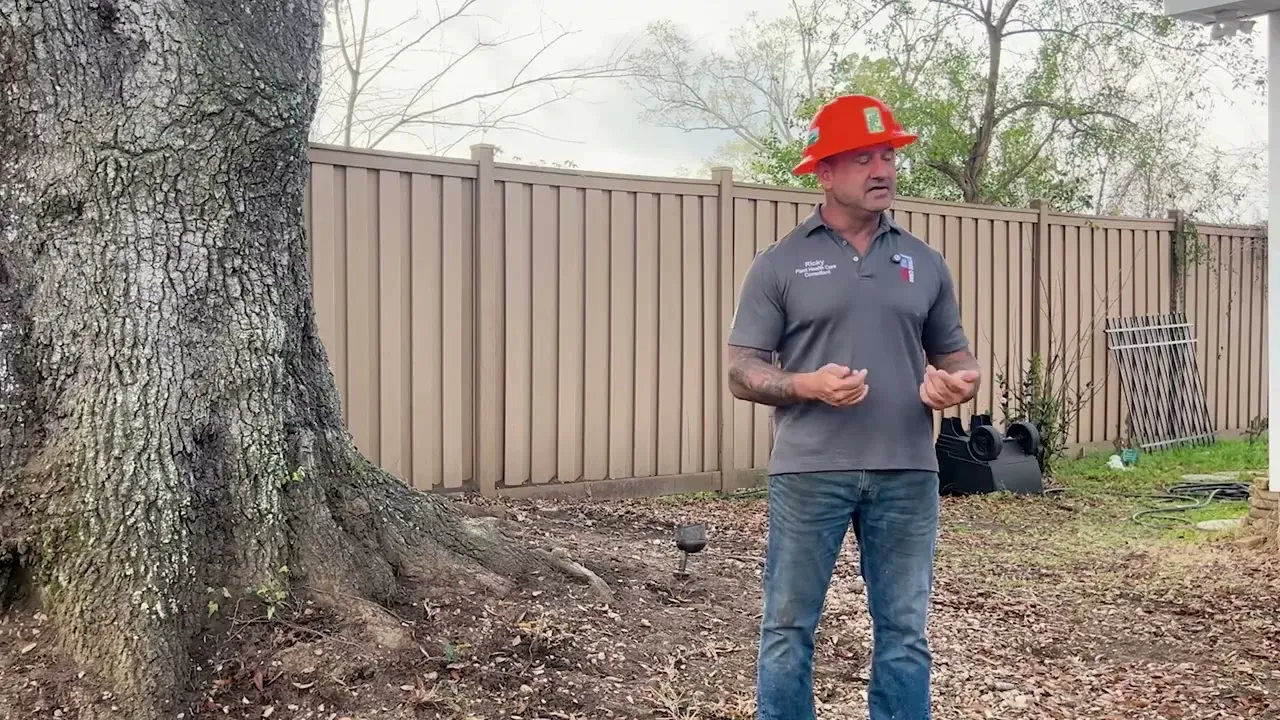
The base of a tree, where the trunk flares into the main roots, is one of the most important and most often buried parts of the tree. Years of mulch, soil, landscaping and turf can hide problems that slowly kill it.
What an air spade does
An air spade is a tool connected to a large compressor that directs a powerful stream of air into the soil. The air breaks up and blows away soil, sand and mulch while leaving roots intact. A shovel or rake can nick and wound roots. An air spade generally doesn’t.
Why uncover the root flare?
- Inspection. The arborist can see the root flare and structural roots and check for decay, wounds or damage.
- Girdling roots. Roots that wrap around the trunk can act like a slow tourniquet as the tree grows. Once exposed, they can often be removed.
- Moisture and decay. Soil or mulch piled against bark keeps it wet, which softens protective tissue and invites decay fungi and insects.
- Decompaction. The same tool can loosen compacted soil in the root zone so water, air and nutrients can move again.
What happens after
Once the flare is exposed and any problems are corrected, the root zone is typically treated and covered with arborist wood chips kept several inches away from the trunk. That protects roots, holds moisture and feeds soil life as it breaks down.
Is it right for your tree?
Air-spade work is especially valuable for mature and historic trees, trees showing unexplained decline, and trees near past or planned construction. An arborist can tell you whether it’s warranted.